
If you’ve ever found yourself staring blankly at a textbook or zoning out during a long lecture, you’re not alone. The traditional way of learning, listening passively, taking notes, and memorizing information, has been the norm for decades. But more and more students (and educators) are starting to realize that this method just doesn’t cut it anymore. Active learning is changing the game. It flips the script by making you, the student, take charge of your learning. Instead of being a passive sponge soaking in information, you’re actively engaging with it. That might mean solving problems, discussing ideas with classmates, teaching others, or even applying quantitative or qualitative research concepts to real-life situations. This shift isn’t just trendy; it’s backed by a growing body of research that shows it works.
Active learning is all about doing. It’s not just about listening to a professor talk; it’s about thinking, questioning, interacting, and applying. According to Bonwell and Eison (1991), active learning involves “students doing things and thinking about the things they are doing.” In simpler terms, it means getting your brain involved in the process instead of just trying to memorize facts. So why does this matter? Because the goal of seeking education isn’t just to pass exams, it’s to actually understand what you’re learning and be able to use it. Active learning helps make that happen.
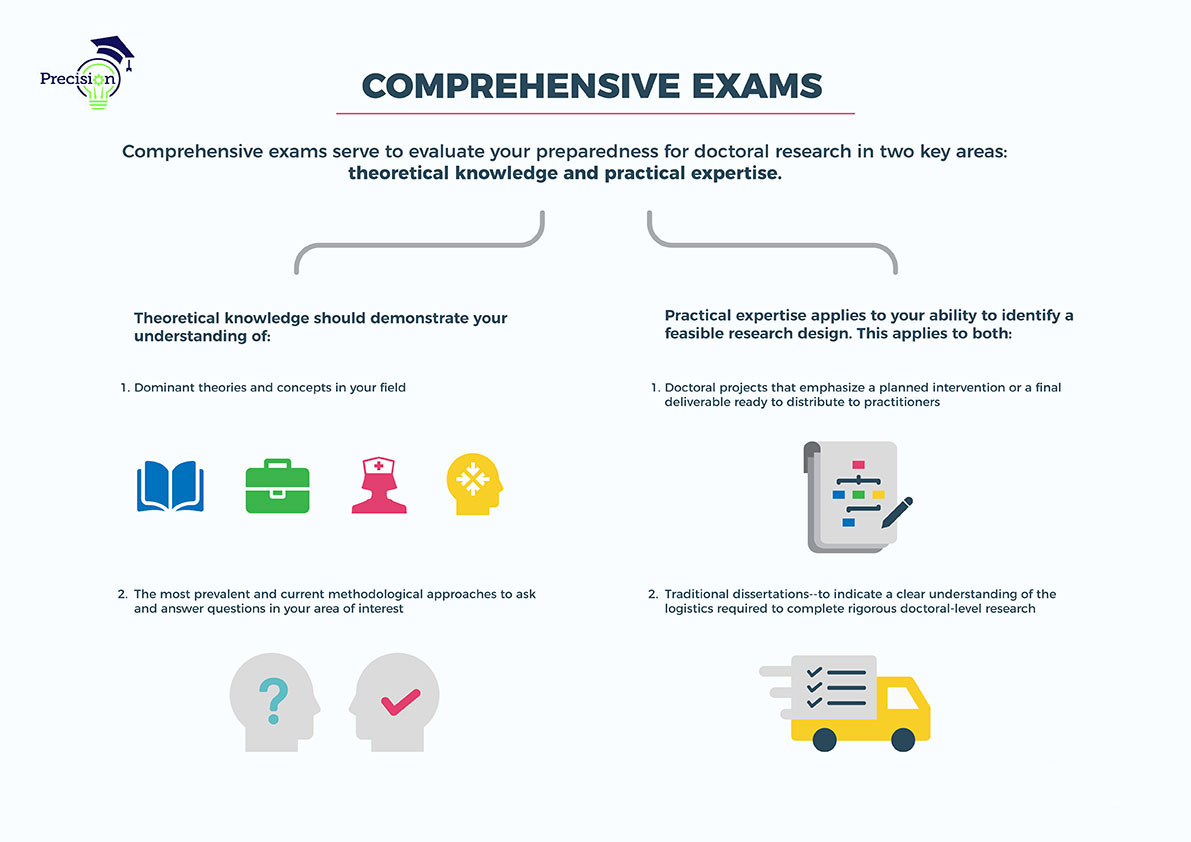
Multiple studies have shown that students who use active learning techniques tend to retain information longer, understand it more deeply, and perform better overall. One well-known meta-analysis by Freeman et al. (2014), which looked at over 225 studies, found that students in active learning classrooms scored significantly higher on comprehensive exams and were less likely to fail compared to students in traditional lecture-based settings.
That’s a huge deal, not just for grades, but for your long-term success. Active learning doesn’t just help you get through a course; it helps you develop critical thinking, problem-solving, and communication skills that are essential no matter what field you’re in. In today’s fast-paced world, the ability to memorize and regurgitate information isn’t nearly as valuable as the ability to analyze, adapt, and solve problems. Employers are looking for people who can think critically, work in teams, and keep learning throughout their careers. Active learning helps you build those exact skills, often without you even realizing it.
Plus, with the rise of online and hybrid learning, it’s become even more important to find ways to stay engaged. Without the structure of a physical classroom, it’s easy to lose focus. Active learning techniques can help keep you involved, motivated, and on track, whether you’re in a lecture hall or watching a video from your couch. This blog post will walk you through some of the most effective active learning techniques that every student can start using in their coursework. Each section will focus on a different approach, from collaboration and reflection to tech-based tools and creative strategies, so you can find what works best for you.
Whether you’re struggling to stay focused, aiming for better grades, or just want to make the most out of your education, active learning can make a real difference. Let’s dive in.
1. Collaborative Techniques: Learning Through Peer Interaction

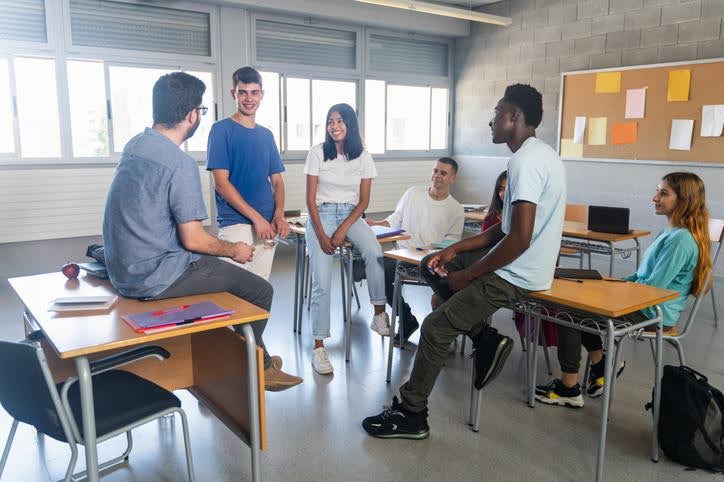
If you’ve ever had a study buddy who helped you understand a tricky concept, you’ve already experienced the power of collaborative learning. Working with others isn’t just about splitting up a group project; it’s one of the most effective ways to actively learn. When you interact with your peers through discussions, problem-solving, or even informal conversations, you’re engaging with the material in a deeper way. You’re not just absorbing knowledge; you’re processing it, questioning it, and applying it in real-time. That’s active learning in action.
Why Learning with Others Works
Learning is social. As humans, we make sense of things by talking about them, asking questions, and bouncing ideas off each other. According to Vygotsky’s theory of social constructivism, knowledge is constructed through interaction with others, especially peers (Vygotsky, 1978). So, when students seeking dissertation help work together, they’re not just helping each other; they’re actually building knowledge in a more meaningful and lasting way. A study by Johnson and Johnson (1999) found that students who participated in cooperative learning (where students work in small groups toward shared goals) achieved higher academic performance, showed better retention of information, and reported more positive attitudes toward learning.
a) Study Groups: More Than Just Splitting the Work
A well-organized study group can be a game-changer. The key is to avoid turning it into a passive hangout. Instead, assign roles, set specific goals for each session, and challenge each other to explain difficult topics. When you explain something to someone else, you’re reinforcing your own understanding, a phenomenon known as the “protégé effect.” Teaching others helps you uncover what you actually know… and what you don’t.
Tip: Try the “Teach-Back” method. After reviewing a concept, each member takes turns teaching it back to the group in their own words.
b) Peer Teaching: Learn by Teaching
Peer teaching doesn’t have to be formal. It can be as simple as one student helping another understand a confusing lecture or walking a friend through a problem set. The act of teaching forces you to organize your thoughts, identify key points, and anticipate questions, especially when preparing for a defense presentation. In fact, research has shown that students who teach their peers often outperform those who only study on their own (Benware & Deci, 1984). That’s because teaching requires higher-order thinking, synthesis, application, and evaluation, all core components of active learning.
c) Reciprocal Questioning: Sparking Thoughtful Dialogue
Instead of waiting for your dissertation coach to ask questions, try creating your own and challenge your peers to answer them. Then switch roles. This back-and-forth questioning style, called reciprocal questioning, builds confidence and sharpens analytical thinking. Use Bloom’s Taxonomy to guide your questions. For example:
- Remembering: What are the main points of this theory?
- Analyzing: How is this different from the previous model?
- Creating: Can you come up with a new example that fits this concept?
The goal isn’t to stump each other; it’s to think critically together.
d) Structured Debates: Practice Critical Thinking on Your Feet
Debates aren’t just for political science or law classes. They’re an excellent way to explore complex topics from multiple angles. Whether you’re debating the pros and cons of a theory or the ethical implications of a real-world issue, you’re forced to:
- Understand both sides,
- Research deeply, and
- Present your argument clearly.
This helps improve not just your subject knowledge, but also your ability to reason, communicate, and defend your ideas, skills that are essential far beyond the classroom. Even if you’re shy, structured debate formats (with time limits and roles) can make it easier to participate without feeling overwhelmed.
e) Role-Playing and Simulations: Bringing Theory to Life
Role-playing is a powerful and fun way to immerse yourself in course material. In history, you might reenact historical negotiations. In business courses, simulate a boardroom pitch. In medical training, you might act as doctor and patient. These activities engage your imagination and make abstract concepts feel tangible. Plus, they encourage empathy and perspective-taking, which are often missing from textbook learning.
Working with others isn’t just helpful, it’s transformational. Collaborative techniques allow you to see the material through different lenses, uncover blind spots, and build real-world skills like communication and teamwork. But learning doesn’t always have to happen out loud or in groups. Sometimes, the most powerful insights come when you take a moment to pause, reflect, and make the material your own. That brings us to the next section on reflective practices, an often overlooked but essential part of active learning that helps turn coursework into lasting personal insight.
2. Reflective Practices: Turning Coursework into Personal Insights

One of the biggest mistakes students make is rushing from one coursework assignment to the next without ever stopping to think about what they’re actually learning. It’s easy to get caught up in deadlines, grades, and to-do lists, but if you don’t take a moment to reflect, you miss out on the deeper value of your education. Reflection is more than just reviewing your notes before an exam. It’s about pausing, looking back at what you’ve learned, and asking yourself, “What does this actually mean for me?” It helps you connect the dots, identify patterns, and internalize lessons in a way that sticks.
Why Reflection Matters in Learning
Reflection takes learning from surface-level to something much more meaningful. According to Schön (1983), reflective practice helps learners make sense of complex experiences and adapt their understanding as they grow. It’s like processing the story behind the facts, rather than just memorizing bullet points. Research also supports this. A study by Sandi Mann et al. (2009) showed that students who practiced regular reflection reported better academic performance and greater clarity in their thinking. Simply put, when you reflect, you understand, not just remember. Let’s look at a few simple but powerful ways to bring reflection into your coursework.
a) Journaling: A Conversation with Yourself
This isn’t your childhood diary. Academic journaling is a space where you write honestly about what you’re learning, what confuses you, and how the material connects to your own life or goals. For example, after finishing a chapter in your sociology course, you might journal about how the concepts relate to something you experienced during a part-time job or something you’ve seen in the news. This reflection helps embed the material in your memory because now it has personal meaning. Try this prompt:
- “What surprised me in today’s class?”
- “How does this topic relate to something I already know?”
- “What questions am I still wrestling with?”
Over time, your journal becomes a roadmap of your academic growth and a great resource for exams or essays.
b) Concept Mapping: Visual Thinking Made Simple
If you’re more of a visual learner, concept maps are a fantastic tool. They help you see relationships between ideas and topics, especially in a topic development area that builds on prior knowledge, like science or psychology. Start with one central idea (like “Climate Change”) in the center of the page. Then branch out with connected terms (e.g., greenhouse gases, human activity, policy, mitigation strategies) and keep expanding. Especially when developing a problem statement, seeing the bigger picture laid out helps you mentally organize what you’ve learned in current literature and spot areas you might need to review. According to Novak and Cañas (2008), concept mapping can promote meaningful learning because it forces learners to reorganize knowledge instead of just storing it passively.
c) Self-Assessment Checklists: Know Where You Stand
Ever reached the end of a course and thought, “Wait, did I actually learn all that?” That’s where self-assessment comes in. Creating checklists based on your course objectives can help you track your own understanding as you go. For example:
- “Can I explain this concept in my own words?”
- “Can I apply this to a real-world situation?”
- “Have I completed practice problems or applied feedback?”
When you get into the habit of regularly checking in with yourself, you’re more likely to catch gaps early and stay motivated because you can see your progress.
d) Reflection Papers: Bringing Theory into Your World
Some professors assign reflection papers after projects or readings, and honestly, they should assign more. These papers allow you to process and personalize what you’ve learned, rather than just regurgitate it. Even if you’re not required to write one, doing a short, informal version on your own after a coursework module can be incredibly valuable. The key is to move beyond just what you learned and focus on why it matters or how it affects you. Example: After learning about psychological biases, you might reflect on how those biases affect your own decision-making or relationships.
Making Reflection a Habit, not a Chore
Like anything new, reflection might feel awkward at first. But the more you do it, the more natural it becomes. Whether it’s five minutes after class, a weekly journal entry, or a quick sketch of a concept map, it doesn’t have to be perfect or formal. What matters is that you’re actively making sense of your learning journey, not just coasting through it. Of course, reflecting on what you’ve learned is just one piece of the puzzle. Another powerful way to deepen your understanding is by applying knowledge to real-world challenges. That’s where problem-based and case-based learning come into play, two techniques that turn abstract theories into practical, hands-on experiences. Let’s dive into how they work.
3. Problem-Based and Case-Based Learning: Tackling Real-World Scenarios

Sometimes, the best way to learn isn’t by studying harder, it’s by tackling a real problem and figuring things out along the way. That’s exactly what problem-based learning (PBL) and case-based learning (CBL) are all about. Instead of starting with a lecture or textbook, you start with a situation, and work your way through it using logic, teamwork, and what you’ve already learned. These approaches aren’t just popular buzzwords. They’ve been widely adopted in fields like medicine, business, law, and engineering, and for good reason. They help students go beyond memorization and start thinking like professionals. Let’s break down why this kind of learning works, and how you can apply it in your own coursework.
Why Real-World Scenarios Make Learning Stick
When you’re thrown into a problem that feels real, even if it’s simulated, your brain switches gears. You’re no longer passively reviewing facts. You’re trying to solve something. That kind of mental engagement boosts motivation, creativity, and long-term retention. According to Barrows (1986), problem-based learning helps students develop critical thinking and self-directed learning skills because they have to research, evaluate, and synthesize information on their own. Similarly, CBL gives students a chance to apply abstract theories in practical, often complex, scenarios, something textbooks alone can’t offer (Herreid, 2011).
a) Problem-Based Learning (PBL): Learning by Solving
In PBL, you’re given a real or realistic problem and expected to work toward a solution, without a step-by-step guide. That might sound intimidating, but that’s the point. It encourages deep thinking and forces you to connect the dots. For example, in a nursing course, students might be presented with a patient case and asked to diagnose and recommend a treatment plan. Additionally, in engineering, you might be asked to design a solution for a community’s water supply issue using certain materials and constraints. Even if your professor doesn’t formally assign PBL tasks, you can still use this method by framing study questions like problems:
- “How would I solve this issue if I were the expert?”
- “What tools or concepts could apply here?”
This mindset shift transforms how you interact with the material and makes studying far more engaging.
b) Case-Based Learning (CBL): Applying Theory to Real Situations
Case-based learning is similar, but it often starts with a detailed story or real-world scenario that has already happened. Your job is to analyze it, apply relevant theories, and discuss possible outcomes or better alternatives. Let’s say you’re studying marketing. You might be given a case where a company’s product launch failed. Your task? Figure out what went wrong and what they could have done differently. CBL works especially well in:
- Business and management courses (e.g., Harvard Business School case studies)
- Medical education (e.g., patient histories with diagnostic clues)
- Law (e.g., legal case analysis and argument building)
- Public health, education, and even environmental studies
When you break down a complex situation and apply academic knowledge to it, you not only remember the content better, but you also understand why it matters.
c) Mini Research Projects: Take Ownership of the Learning Process
You don’t have to wait for a professor to assign a case or problem. You can create your own mini research projects. Pick a topic that interests you, find a real-world issue related to it, and explore how course concepts apply. Example, studying climate science? Research how rising sea levels are affecting a specific coastal city. In a sociology course? Investigate how social media is influencing voting behavior in your age group. Even a 2–3-page research summary or informal presentation to a study group can push you to think critically and explore beyond the textbook.
d) Scenario Planning Exercises: Thinking Ahead
Another useful technique is scenario planning, imagining how a situation might play out under different conditions. This is used a lot in business strategy and environmental studies, but can be applied anywhere. For instance, in public health, what happens if a new virus emerges in a rural area? In education, how would policy changes affect access to special education services? By playing out “what-if” scenarios, you’re practicing anticipatory thinking, a key skill in decision-making roles.
Don’t Wait for the Perfect Setup, Start Practicing Now
The beauty of PBL and CBL is that you don’t need a fancy setup or structured classroom format. You just need curiosity, a bit of creativity, and a willingness to think things through. You can practice this kind of learning solo, in groups, or even online, using real news stories, YouTube documentaries, or articles from academic journals. Remember: thinking like a professional starts by learning like one. Now that we’ve explored how real-world problems can enhance your learning, let’s look at another modern twist: using technology to make learning more interactive, personalized, and even fun. In the next section, we’ll dive into Tech-Enhanced Active Learning and explore the digital tools that can help you stay engaged, organized, and ahead of the curve.
4. Tech-Enhanced Active Learning: Tools That Elevate Engagement

Let’s be honest, staying focused in today’s digital world is hard. There’s a constant flood of notifications, distractions, and endless scrolling. But the good news is that technology doesn’t have to be your enemy in education; in fact, when used right, it can be one of your biggest learning assets. Tech-enhanced active learning uses apps, online platforms, and digital tools to help you engage more deeply with course material. And we’re not just talking about watching a video or reading a PDF. We’re talking about doing things, quizzing yourself, simulating experiments, joining live discussions, building digital projects, and more. Let’s dive into how you can harness the power of tech to make your coursework more interactive, efficient, and fun.
a) Spaced Repetition Apps: Learning That Sticks
One of the most powerful ways to memorize and retain information is through spaced repetition. Instead of cramming everything the night before, spaced repetition helps you review information just as you’re about to forget it. Apps like Anki, Quizlet, and Brainscape are designed for this exact purpose. You create digital flashcards, and the app figures out when to show them again based on how well you know each one. Research shows that spaced repetition significantly improves long-term memory retention (Cepeda et al., 2006). Whether you’re learning vocabulary, formulas, or historical dates, these apps help you spend less time reviewing and more time remembering. Tip: Pair flashcards with visuals and real-life examples to activate both your memory and understanding.
b) Online Discussion Boards: Keep the Conversation Going
Class doesn’t have to stop when the lecture ends. Tools like Canvas, Slack, Discord, or even private Reddit-style forums are great spaces for academic conversations. You can:
- Ask questions when you’re stuck.
- Debate ideas with classmates.
- Share helpful resources (articles, podcasts, videos).
- Reflect on weekly content with prompts.
These platforms give everyone a voice, especially students who might be shy in class. Plus, they help you see how others are thinking about the same material, which can challenge and expand your own understanding.
c) Virtual Labs and Simulations: Learning by Experimenting

In STEM courses, hands-on learning is crucial, but not always possible in a physical lab. That’s where virtual simulations come in. Sites like PhET Interactive Simulations, Labster, or course-specific apps allow you to conduct chemistry experiments, build circuits, explore ecosystems, or model physics equations, all from your laptop. These tools let you test theories in a safe, interactive environment, repeat experiments without limits, and visualize abstract concepts in action. According to Makransky et al. (2019), students using virtual labs showed better conceptual understanding compared to those in traditional settings, especially when simulations were paired with guided reflection or discussion.
d) Gamified Learning Platforms: Turn Studying into a Challenge
Gamification isn’t just for elementary school apps; it works at all levels. Platforms like Kahoot! Duolingo, Classcraft, and even language-learning games on Memrise use leaderboards, streaks, and rewards to keep learners motivated. Gamified learning taps into your natural drive for competition, achievement, and progress tracking. Suddenly, practicing vocabulary or reviewing quiz material doesn’t feel like a chore; it feels like leveling up.
Bonus tip: Set personal challenges or invite friends to compete with you. It’s a great way to mix fun with focus.
e) Digital Note-Taking and Organization Tools
Keeping your coursework organized is half the battle. Apps like Notion, Evernote, Obsidian, or OneNote allow you to organize your notes in smart, searchable formats, way better than scattered papers or messy Google Docs. You can embed videos and images directly into your notes, link related qualitative or quantitative research ideas together using tags or backlinks, and add to-do lists and reminders for assignments or readings. Even better, you can combine reflective practices (like journaling or concept mapping) with tech, making your study process both meaningful and manageable.
Technology Is a Tool, Not a Shortcut
It’s tempting to think that using technology will make learning “easier,” but the truth is, it only works when you engage with it. Passive scrolling through lecture slides isn’t active learning. But using digital tools to interact, experiment, and reflect? That’s a whole different story. Whether you’re a tech-savvy student or just starting to explore these tools, the goal is the same: use technology to deepen your learning, not distract from it. Of course, not all active learning has to happen on a screen. In fact, some of the most memorable learning experiences happen when you tap into your creativity.
Conclusion
Active learning isn’t just a buzzword; it’s a practical mindset that helps students take ownership of their education. From collaborating with peers and using technology smartly to reflecting on lessons and expressing ideas creatively, these techniques make learning more meaningful and lasting. They also build crucial skills like problem-solving, critical thinking, and communication, the kind of abilities students need not just in class, but in real life.
For students working on major academic projects, especially dissertations, active learning becomes even more important. Whether you’re pushing through the challenges of qualitative research, interpreting data through qualitative analysis, or just feeling stuck in the process, you don’t have to do it alone. Our team offers expert dissertation help, including dissertation consulting, help with dissertation structure, and dedicated support. Think of us as your academic partner, or even your personal dissertation coach, guiding you from planning to completion.
If you’re looking for reliable dissertation services or simply need targeted dissertation assistance on your next milestone, we’re here to help. Active learning starts with action, so take the next step with support that’s personalized, experienced, and committed to your success. Whether you’re in the early stages or deep into your research, our goal is to make sure you not only finish but thrive.
References
Barrows, H. S. (1986). A taxonomy of problem-based learning methods. Medical Education, 20(6), 481–486. https://doi.org/10.1111/j.1365-2923.1986.tb01386.x
Benware, C. A., & Deci, E. L. (1984). Quality of learning with an active versus a passive motivational set. American Educational Research Journal, 21(4), 755–765. https://doi.org/10.3102/00028312021004755
Bonwell, C. C., & Eison, J. A. (1991). Active Learning: Creating Excitement in the Classroom. ASHE-ERIC Higher Education Report No. 1. George Washington University.
Cepeda, N. J., Pashler, H., Vul, E., Wixted, J. T., & Rohrer, D. (2006). Distributed practice in verbal recall tasks: A review and quantitative synthesis. Psychological Bulletin, 132(3), 354–380. https://doi.org/10.1037/0033-2909.132.3.354
Freeman, S., Eddy, S. L., McDonough, M., Smith, M. K., Okoroafor, N., Jordt, H., & Wenderoth, M. P. (2014). Active learning increases student performance in science, engineering, and mathematics. Proceedings of the National Academy of Sciences, 111(23), 8410–8415. https://doi.org/10.1073/pnas.1319030111
Herreid, C. F. (2011). Case Study Teaching. New Directions for Teaching and Learning, 2011(128), 31–40. https://doi.org/10.1002/tl.466
Johnson, D. W., & Johnson, R. T. (1999). Learning Together and Alone: Cooperative, Competitive, and Individualistic Learning (5th ed.). Allyn & Bacon.
Makransky, G., Terkildsen, T. S., & Mayer, R. E. (2019). Adding immersive virtual reality to a science lab simulation causes more presence but less learning. Learning and Instruction, 60, 225–236. https://doi.org/10.1016/j.learninstruc.2017.12.007
Mann, S., Gordon, J., & MacLeod, A. (2009). Reflection and reflective practice in health professions education: a systematic review. Advances in Health Sciences Education, 14(4), 595–621. https://doi.org/10.1007/s10459-007-9090-2
Novak, J. D., & Cañas, A. J. (2008). The theory underlying concept maps and how to construct and use them. Technical Report IHMC CmapTools 2006-01 Rev 01-2008.
Schön, D. A. (1983). The Reflective Practitioner: How Professionals Think in Action. Basic Books.
Vygotsky, L. S. (1978). Mind in Society: The Development of Higher Psychological Processes. Harvard University Press.